


Salesforce Document Automation: The Complete Guide to Files
Your team is wasting hours downloading attachments one by one, and you’re paying the hidden cost of a manual workflow. Every contract, invoice or compliance certificate you upload to your CRM is business data of value. Getting those files out of the platform organized is often an administrative nightmare, and it takes time. Salesforce document automation can leave data teams and admins with a broken process, scrambled file names, lost relationship data, and grinding productivity without the right framework in place.
Thank you for reading this post, don't forget to subscribe!Most organizations hit the breaking point at some system audit or a clean migration or the dreaded File Storage Limit Exceeded error. Native extractors usually just dump files into a jumble of a “Zip File Scavenger Hunt” leaving you with a flat list of meaningless documents. For fast growth, your business requires a solid plan for automating, filtering and exporting files while keeping the metadata that gives them value.
Why Modern Teams Can’t Export Native Salesforce Files
Salesforce is designed for data ingestion and correlation, but bulk data extraction is notoriously painful. When you upload a file, it is stored as three separate objects internally: ContentDocument, ContentDocumentLink and ContentVersion.
native data export tools completely destroy this three-object relationship. Native export process strips out file names and replaces them with random alphanumeric IDs that disconnect the file from its parent account or opportunity record.
Huge obstacles are routine operations without any selective filtering. Admins are stuck writing complex apex code or spending days mapping ids back to records in excel. The right salesforce document automation should remove this friction and not add more manual work.”
The Foundation for Salesforce Document Automation That’s Really Packing a Punch
File Management from dump all to smart targeting. 3 Pillars of a modern automation strategy
1. Granules screened, not dumped haphazardly .
You almost never need to export all files in your org at once. Real salesforce document automation lets you filter and extract only the files that meet your criteria in one step. Choose files by creation date, record status or custom object fields? Targeted extraction keeps your data pipelines tidy.
2. Preserve all metadata as is
A file without the context is useless. If you want the export to be operationally valuable, then you need to keep meta data such as owner, object type and record association completely intact. External teams can work with the data directly if you export it with file names and folder structure in place.
3. Flow is Repeatable & Admin Friendly
You shouldn’t have to hire a team of developers to manage your data. Build your operations around tools that natively support both standard and custom list views to create a sustainable strategy. This allows administrators to dump data without writing complex code.
Files downloader Top file exporter for administrator
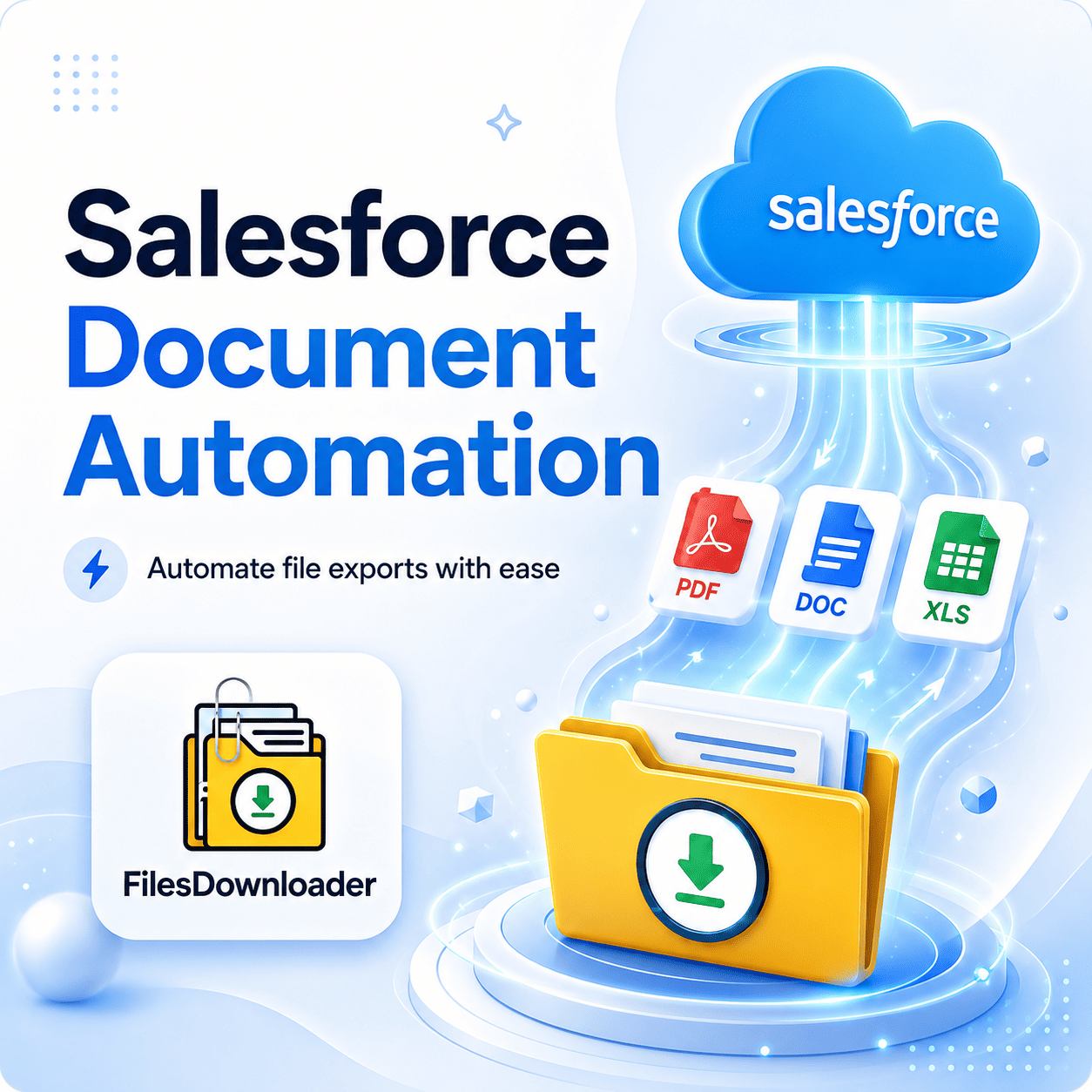
Files Downloader is a creative solution for data teams to connect the complex architecture of the CRM to efficient workflows. Break native file exporting limits with this native AppExchange app, a must have file exporter for Salesforce admins and data teams.
Files Downloader takes the complexity out of data downloads and brings real salesforce document automation to your org. Specialize in objects and fields. It’s the fastest way to extract Salesforce files with no need for complex 3rd party tools or custom integration scripts.
File Downloader: Benefits and Features
List Views One-Click Bulk Actions
Files Downloader is a must-have in your daily work environment and fully compatible with your Salesforce data export and file management needs. Admins and users can mass export files and attachments from any list views, including standard and custom list views, from across your entire org.
Full Format & Structural Soundness
It stores your records and supports all file types like pdf, image (.jpg, .png), word document or spreadsheet. Files Downloader ensures you export files you download files & attachments from Salesforce in the same format they were uploaded in. Most important it keeps original file names and folder structure during export, it makes clean up process unnecessary after export.
Export SOQL Query (Advanced Filter)
You can even bypass the typical user interfaces if you have more complex data needs. Create your own SOQL Query Export for the most recent data now. Deep relational queries let you filter and extract data. This is very useful for clean migrations, compliance audits and regular system back-ups.
Speed up downstream systems with automated file exports
Document automation for your salesforce is more than just the CRM. Clean exported files to streamline workflows across your entire data ecosystem.
Streamlined Database Ingestion Relational metadata stored, to make export of Salesforce data to SQL Server or Excel easier.
Audit Readiness: Teams can pull specific ContentVersion files by object type and date range as needed, not a mad dash during a compliance check.
Storage Cost Relief – Automate the offload of legacy files to free up space within the organization without costly storage upgrades.
Automating these processes frees up your operations team to save time sifting manually through data and focus more on strategic growth.
How To Build An Automated Export Step By Step Guide
Files Downloader removes the complexity of mappings to automate your Salesforce document:
Go to your object Open any list view for a standard object or custom object in your Salesforce org.
Set filters Use the listview filter to only show the records that have the files you require.
Export and Select Click the Files Downloader button to export Salesforce files from both standard and custom objects at the same time.
Download Your Packaged Package Ensure that your files are correctly named, sorted into folders and contain all relevant meta data.