


How to Bulk Export Salesforce Records to CSV and Excel
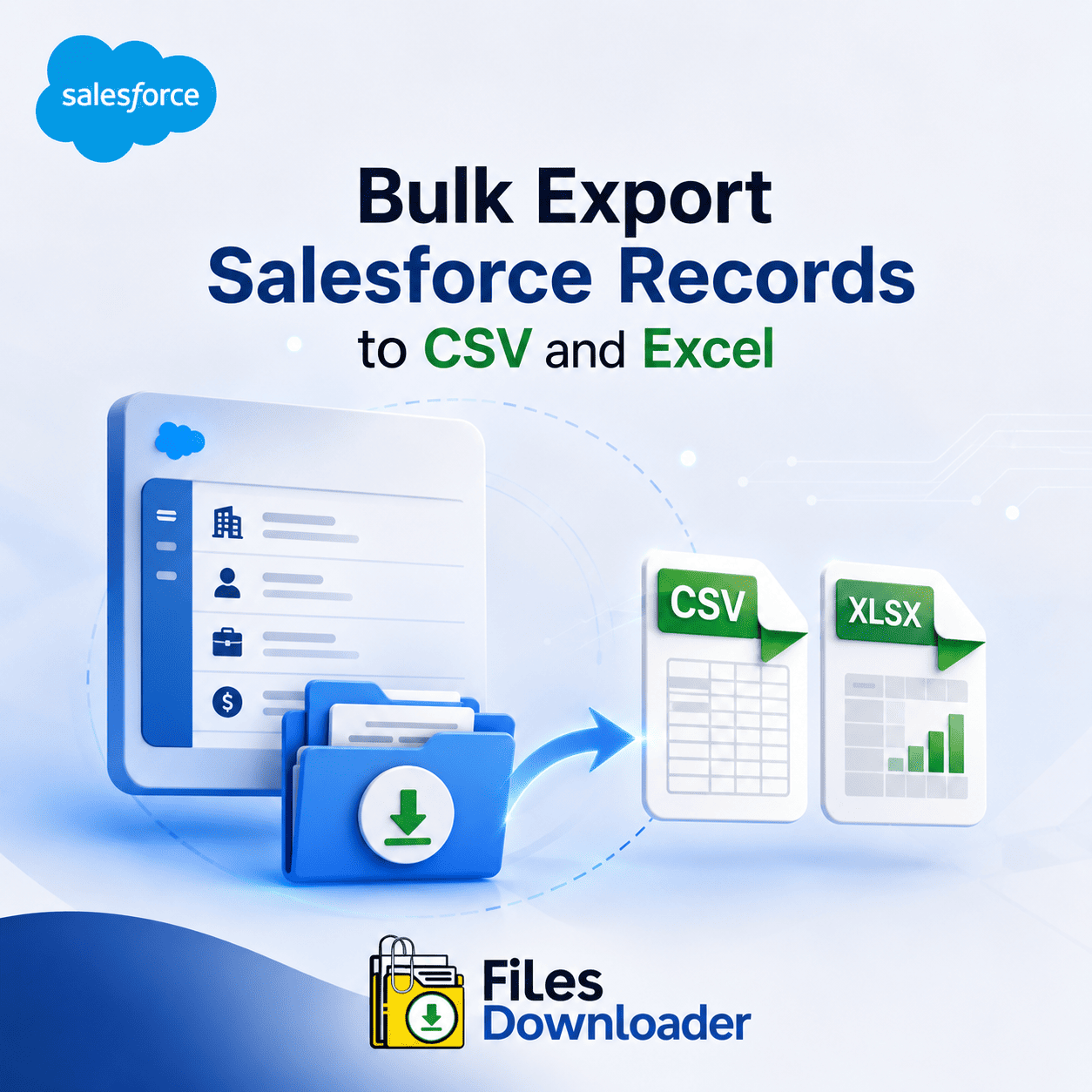
To bulk export Salesforce records to CSV and Excel, you need to pull structured record data—account names, opportunity amounts, case statuses, custom object fields—out of Salesforce and into a spreadsheet format for reporting, analysis, or backup. This is native record data, not files or attachments, and Salesforce offers several built-in ways to do it depending on how much data you’re moving and how often. Picking the right one before you start saves hours of re-exporting with the wrong tool.
Thank you for reading this post, don't forget to subscribe!The Right Way to Bulk Export Salesforce Records to CSV and Excel
A few native paths handle bulk record export, each suited to a different scale and use case:
- Data Export Wizard (Setup > Data Export) — the simplest native option, available on all editions, generates a full export of your org’s data as CSV files on a weekly or monthly schedule (or on demand for some editions). Best for periodic full-org backups rather than targeted pulls.
- Data Loader—a free desktop tool from Salesforce for exporting (and importing) large volumes of records via SOQL query directly to CSV. This is the standard choice when you need a specific object or filtered subset rather than your entire org.
- Report Export Details—for smaller, ad hoc exports, any Salesforce report can be exported directly to Excel (.xlsx) or CSV in a couple of clicks from the report view itself.
- Salesforce CLI / Bulk API—for developers automating recurring exports, the Bulk API can pull large volumes of record data programmatically, ideal for scheduled jobs feeding external systems.
If your bottleneck is genuinely getting account, opportunity, or custom object record data into CSV or Excel, one of these four is the tool to use—a file export tool, including ours, doesn’t export record field data itself.
Why Native Record Exports Don’t Cover Your File Attachments
Here’s where most admins hit a second, separate problem: the records you just exported to CSV often have files attached to them — contracts, invoices, signed agreements, compliance documents — and none of the tools above touch those. Data Loader and the Data Export Wizard export field values, not the PDFs and documents sitting on ContentVersion records tied to those same Accounts and Opportunities.
Salesforce’s native file export tools have their own separate limitations here. The default Weekly Export Service dumps attachments into unstructured zip archives, strips original file names, and replaces them with unreadable record IDs—the “zip file scavenger hunt” familiar to any admin who’s tried to reconcile a batch of files back to the records they belong to. There’s no selective filtering either, so a “File Storage Limit Exceeded” warning forces an all-or-nothing export instead of a targeted one tied to the same record set you just pulled into CSV.
Exporting the Files Behind Your CSV/Excel Data with a Files Downloader
Once your record data is in CSV or Excel, here’s the workflow for pulling the attached files that go with it:
1. Start from the same list view or object. Use the standard or custom list view matching the records you just exported—Accounts, Opportunities, Cases, or any custom object—to filter to the exact file set you need.
2. Run SOQL for precision. Target specific ContentVersion records by parent object type, date range, file type, or owner instead of downloading your entire file library.
3. Export with full context intact. Files retain their original names, folder structure, owner, object type, and parent-record association, so every document stays traceable back to the Account or Opportunity behind your CSV data.
4. Load cleanly into the same downstream systems. Structured output goes straight into SQL Server, Excel, or a data warehouse alongside your exported record data, without manual remapping.
Native Export Tools vs. files downloader
| Capability | Data Loader / Export Wizard | files downloader |
|---|---|---|
| Exports record field data (CSV/Excel) | Yes | No |
| Exports files and attachments | No | Yes |
| Selective filtering | SOQL required (Data Loader) | List view or SOQL-based |
| File metadata preservation | N/A | Owner, object type, record link retained |
| Setup complexity | Desktop install, SOQL knowledge | One-click, no code |
Because the file export runs natively within Salesforce and respects existing permission sets and sharing rules, pulling attachments alongside your CSV data doesn’t introduce a separate compliance risk into your reporting or audit process.
Best Use Cases for Record and File Export Together
- Data migration—export record data to CSV for the new system while separately exporting attached files with relationships intact for a complete, re-ingestible migration package.
- Compliance and financial audits—regulators often require both record history and supporting documentation (signed contracts, invoices); exporting both in parallel meets that requirement in minutes instead of days.
- System backups and disaster recovery—back up record data via Data Loader or the Export Wizard on a schedule, and back up the attached files separately with files downloader so neither side of your data is left unprotected.