


The Complete Guide to Exporting Files and Attachments in Salesforce Security
Salesforce Security is the foundation for every admin, data team, and developer. But when you want to move files out of your org, that’s when it becomes a real problem. When you’re running a migration, planning for an audit or preparing to make a backup, the wrong export process can expose sensitive data, break compliance and leave your records in disarray.
Thank you for reading this post, don't forget to subscribe!Read this guide to the top security considerations for Salesforce file exports and how the right tool can help you keep your data secure at every step.
Why does security fail when exporting files in Salesforce?
Most Salesforce orgs are locked up pretty tight role hierarchies, sharing rules, field level security and permission sets all working together. But when a single individual needs to export a bulk set of files or attachments, those guardrails can quietly disappear.
This is usually where it falls apart:
No cherry picking: Without better filtering, admins have to export all records, including those they shouldn’t mess with. Find an export tool that lets you filter by object type, record owner, date range and custom criteria so you only get what you need.
“Zip Files Scavenger Hunt”: Salesforce native data exports will generate a series of numbered ZIP files in no logical order. Sensitive files contracts, financial attachments, customer PII—get lost in a mountain of junk, and it’s almost impossible to know exactly what left your org.
“Broken Audit Trails = Broken Metadata”: Exporting files without metadata (owner, object type, record association) takes away the ability to prove chain of custody. This is not only an inconvenience for regulated industries, but a non-compliance.
Best Practices For Salesforce File Security
Before running an export, make sure your org follows these basic security practices.
1. Turn on Profile and Permission Set Controls
Limit bulk file exports to a subset of permissions. Periodically check your profiles to make sure you’re not inadvertently exporting data to regular users or community members.
2. ContentVersion and ContentDocument Be Cautious
Salesforce stores files as ContentVersion and ContentDocument objects. These records have metadata like version history, linked records and ownership that are important to security and compliance. “If you export process, you’re creating a blind spot in your file governance.”
3. Monitor your storage space
File storage limit exceeded errors are more than a pain. If you see any of the following, it’s an indication that your organization’s approach to file management needs to be improved. Uncontrolled file growth can result in duplicate uploads, orphaned attachments and records that haven’t been audited for years. Regular export and archiving keeps you within limits and a governed clean environment
4. Verify SOQL Query Export Logic
If you are using SOQL Query Export methods to pull file records, take a close look at the query logic. For example, a query such as SELECT Id FROM ContentVersion with no WHERE clause can return tens of thousands of records, including files from restricted objects or deactivated users.
Scope your queries: always!
Filter on LinkedEntityId to exclude specific objects
Restrict volume by Created Date or Last Modified Date range
Filter records for restricted objects with NOT IN
What Files Downloader Does To Fix Salesforce Security Export Problem
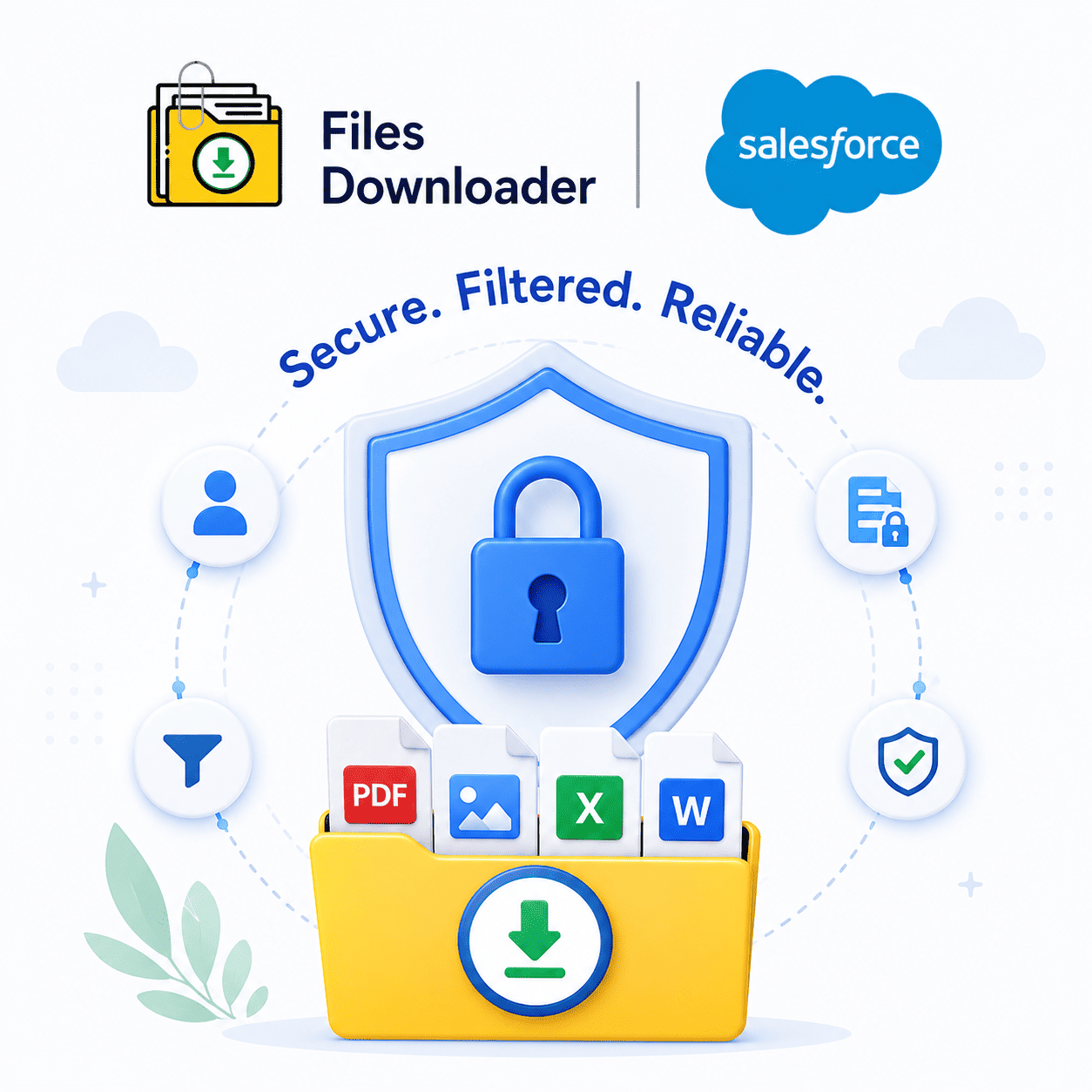
Files Downloader is intended for Salesforce admins and data teams that want to pull files, without breaking Salesforce security. It works within your existing Salesforce environment and maintains your org’s permission structure throughout the export process.
Here’s how it’s the quickest, safest way to import Salesforce files:
Fine Grained Filtering Export Only What You Want
Files Downloader comes with normal and custom list views, allowing you to specify exactly what you want to export. Filtering to get only the files you want, all in one step. No more exporting everything and wading through it. This lowers the risk of sending out sensitive files out of your org by mistake.
Bulk Export of Complete Metadata
Files Downloader retains metadata like owner, object type and record association when exporting mass files and attachments from any list view. This is critical for audits, migrations and regulatory reviews, so you always know exactly where things originated.
It also keeps the original file names and folder structure on export, so the files you receive are ready to go, not some jumbled archive you have to manually re-organize.
Works with any type of file No conversion risk
File Downloader supports all type of files like PDFs, images (jpg, png), docs etc. You download files and attachments from Salesforce in their original form no conversions, no compression, no loss of data.
Full control with your own SOQL query
Power users and developers can write and run their own SOQL query with Files Downloader for instant access to the latest data. Letting you be surgical – targeting specific objects and fields, applying date filters and scoping exports to just the records you need.
How you do it SOQL Query Export fast, accurate and secure.
Excellent for Migrations, Audits & Backups
Files Downloader is a must-have file exporter for Salesforce admins and data teams who use:
Clean Migrations: Export files from standard and custom objects including metadata, ready to import into a new org or external system
Compliance audits: Produce a documented file export that shows exactly what records you have and who owns them
System Backups: Schedule bulk export of all files stored in Salesforce with folder structure and record association.
Post-Export Data Work: Easily import your Salesforce data into SQL Server or Excel and save your team hours of sorting through data manually.