


Salesforce Integration With SendGrid: What Every Admin and Data Team Should Know About Files and Attachments
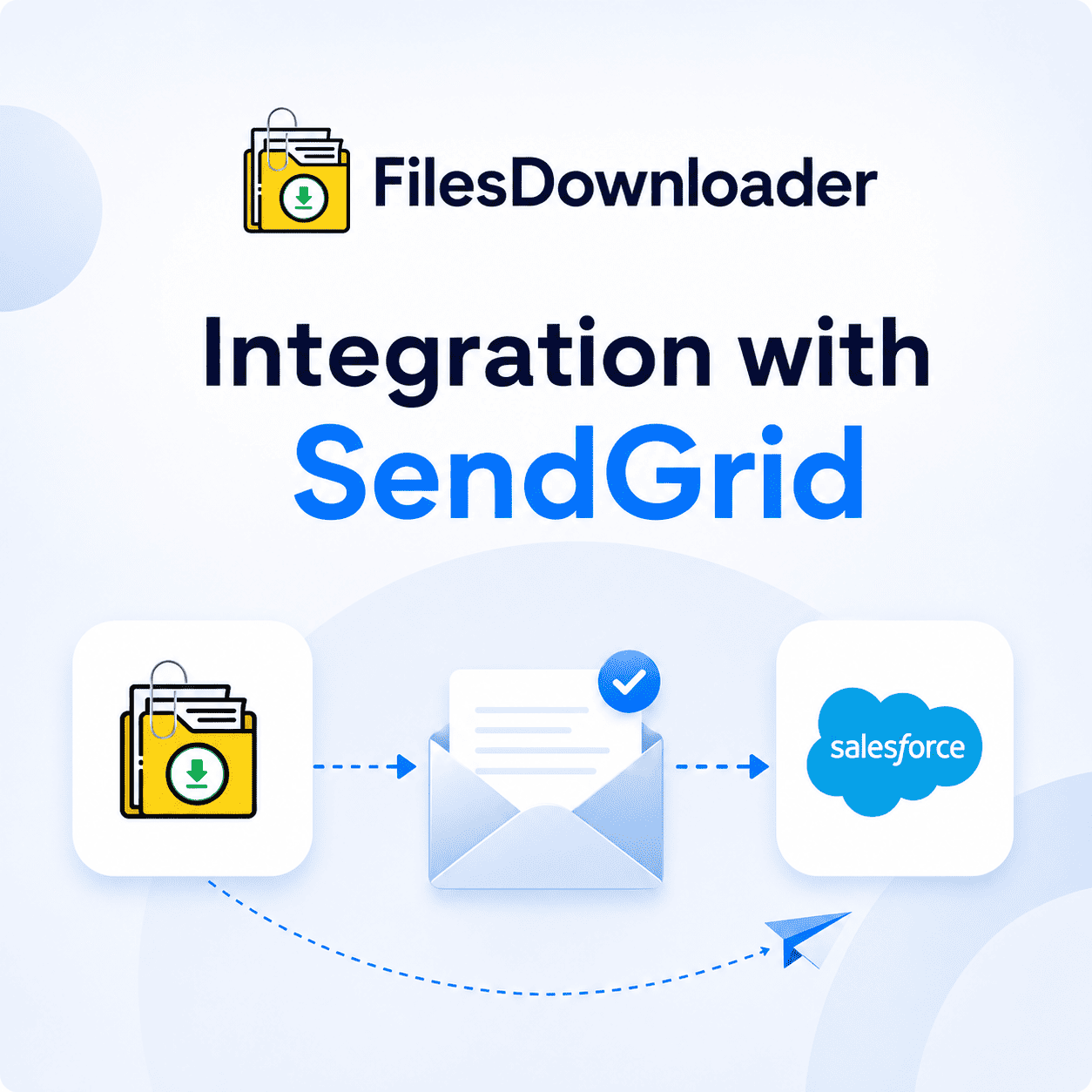
If your team is considering integrating SendGrid with your Salesforce org, you’re making a smart choice about email delivery infrastructure. SendGrid can reliably handle both transactional and marketing email at scale, with detailed delivery analytics and robust API access. Salesforce is where you store your CRM records, contact info, and files attached to those records. The architecture that connects your CRM intelligence to your email delivery engine is integration with SendGrid. But between planning and execution, there’s a file and attachment management step that most SendGrid integration guides never cover. The cleanliness of the files you get out of Salesforce (ContentVersion metadata, original file names, and record associations) is the difference between your integration with SendGrid sending professional, context-rich email communications and a disorganized mess of misnamed attachments.
Thank you for reading this post, don't forget to subscribe!What Integration With SendGrid for Salesforce Really Is
Integration with SendGrid in the context of Salesforce means connecting your Salesforce org to SendGrid’s email delivery infrastructure so that emails — transactional confirmations, contract deliveries, case updates, marketing sequences — can be triggered from Salesforce data, and sent through SendGrid’s reliable delivery engine.
Depending on your use case, this may be several different ways. Teams sending contracts must attach the relevant PDF from the Salesforce record that corresponds with the SendGrid email being sent. Teams running case closure communications need to pull the correct case attachment from Salesforce and deliver it through the SendGrid API. Teams running bulk email campaigns with SendGrid need clean files with the right naming conventions that align with the recipient records in Salesforce.
The same common challenge exists across every SendGrid use case integration: files attached to Salesforce records must be extractable, organized, and metadata-intact before SendGrid can use them meaningfully.
The File Problem No One Talks About in SendGrid Integration Guides
Most of the SendGrid documentation for integration is around API keys, event webhooks, dynamic templates, and suppression lists. What it almost never talks about is the state of the Salesforce files and attachments that need to go through the Sendgrid email pipeline. And that’s the first real operational problem most integration with SendGrid projects encounter.
The “Zip File Scavenger Hunt” before the email goes out
When teams attempt to use native export tools to prepare Salesforce files for SendGrid integration, what they get is a set of numbered ZIP archives, with scrambled filenames and no context for the records. The export bundle completely removes the stored owner, object type, creation date, and record association within Salesforce from the ContentVersion. SendGrid gets files with no relationship to the Salesforce contacts or records they are supposed to be associated with — and any integration with SendGrid workflow on that foundation delivers emails with attachments that recipients cannot identify or use.
The Problem of Lack of Selective Filtering
One of the most expensive pain points in any integration with SendGrid project is the inability to extract Salesforce files selectively for specific email campaigns or transactional triggers. You cannot say with native tools: “Attach only the signed contracts linked to Accounts in renewal stage, created in the last six months, to the upcoming SendGrid campaign.” All native Salesforce file extraction for SendGrid integration is an all or nothing, which means email campaigns go out with the wrong files, duplicate attachments, or nothing at all.
File Storage Limit Exceeded The Integration Blocker Nobody Plans For
Teams running active integration with SendGrid campaigns often find mid-campaign that their Salesforce org has hit or is approaching a File Storage Limit Exceeded threshold. ContentVersion records have been stacking up across every object – Accounts, Cases, Opportunities, custom objects – with almost no warning. With Salesforce, there are separate charges for file storage as opposed to data storage. So the limit can sneak up on you and prevent the file attachment step of an active integration with SendGrid email sequence, at just the wrong moment.
How Files Downloader resolves the File extraction step in every integration With SendGrid Project
The one insight that most SendGrid integration guides over-look is simple: SendGrid takes care of email delivery, but you still need a reliable way to get files out of Salesforce cleanly before they can make their way through the SendGrid pipeline as usable attachments. That is exactly what Files Downloader provides.
Files Downloader is a native Salesforce AppExchange application that will take care of the file extraction step that every integration with SendGrid project needs. Out of the box, it reads ContentDocument, ContentVersion, and ContentDocumentLink giving admins and data teams full bulk extraction control across every standard and custom object where files and attachments need to flow into the SendGrid email workflow.
All Files Your SendGrid Campaign Integration Needs In One Click Extract All Attachment
Downloader works with both standard and custom list views as they exist in your org today. Their existing list view is available for all objects that store files to be integrated with SendGrid. Accounts, Contacts, Opportunities, Cases, and any custom objects your org has built. Open any list view, apply your filters and run a full bulk extract in one step. No intermediate mapping. No rebuilding your workflow. No developer ticket.
This is the quickest way to get Salesforce files ready for SendGrid integration without introducing complex extraction steps on top of an already technical email delivery configuration.
SendGrid-Ready — Download Each File In Its Exact Original Format
Unlike native Salesforce exports that rename or convert files during extraction, Files Downloader actually downloads each file as it was stored in Salesforce, in its original format, filename and folder structure. So SendGrid allows attachments that are properly named and properly formatted so the recipient can easily identify them and open them.
PDFs are still PDFs
Images are still .jpg or .png
Word documents remain .docx
Nothing is compressed in an unreadable archive or renamed with a system-generated ID
All file types that any integration with SendGrid project requires – PDFs, images (.jpg, .png), docs, spreadsheets and more. Consistent formatting means email attachments match expected filenames – no confusion and support tickets over unknown file names.
Keep All Metadata Intact to Ensure Every SendGrid Attachment Remains Traceable
Metadata brings Salesforce file attachments to life inside a SendGrid email campaign. If you don’t, you’ll end up with emails that have attachments that are not traceable back to the Salesforce records that created them when you integrate with SendGrid. Files Downloader keeps all metadata intact through each extraction run:
Original file name — exactly as ContentVersion stored it, never replaced by a system-generated ID
Owner and record association — who created the file, and which Salesforce record it belongs to
Object type context — so every file extracted for a SendGrid campaign maps directly back to the record it came from
This metadata-aware extraction is what makes Files Downloader the essential preparation tool before any integration with SendGrid configuration processes Salesforce file attachments at scale.
SOQL Query Export: Dictate Exactly Which Salesforce Files Flow Into Your SendGrid Workflow
One of the most powerful ways to deal with integration with SendGrid at scale is via Files Downloader’s SOQL Query Export. Now you can write and execute your own queries directly against ContentVersion and related objects—no developer, no Apex code, no waiting on a ticket—giving you surgical control over which Salesforce files become SendGrid email attachments.
Target Specific Salesforce Files with SendGrid Email Campaigns Made Easy
Run your own SOQL query directly in the app to access the latest Salesforce data on the fly. Customize your query as needed. Refine your SendGrid file extraction integration by:
Record type
Object type
Creation date
Owner
Status
Any field your organization is tracking
Pull only the files you need for your SendGrid campaign or transactional email criteria from the objects you want included – all in one step, without having to export everything first and sort later. This guarantees that SendGrid email attachments are accurate, relevant, and directly mapped to the Salesforce contacts receiving them.
Simplify Complex Multi-Object File Extractions for SendGrid Campaigns
In most Salesforce orgs files are mixed up in Accounts, Opportunities, Cases and custom objects at the same time. Files Downloader targets specific objects and fields each time, making complex pre-campaign extractions easier. An Account-level extraction for integration with SendGrid will not inadvertently pick up unrelated Case attachments or ContentVersion records from elsewhere in your org.
Who Benefits Most From Salesforce Integration With SendGrid
Salesforce integration with SendGrid provides the most value to teams that frequently send file-heavy communications triggered by Salesforce record activity. Knowing who benefits most helps you get the extraction workflow right at the outset.
Salesforce Admins leverage Files Downloader to extract and organize files from specific objects prior to integration with SendGrid campaigns going live — and prior to hitting File Storage Limit Exceeded thresholds that would impede email delivery at scale
Sales Teams SendGrid integration helps sales teams by delivering proposal PDFs, contract documents, and pricing sheets attached to Opportunity records cleanly through transactional email with the correct filenames and record associations in place.
Customer Success Teams can use the integration to send case resolution attachments, renewal documents, and onboarding files through SendGrid with metadata preserved so every email attachment is traceable back to the originating Salesforce record.
Marketing Teams can segment and date-range targeted file extraction runs, using Files Downloader, and feed only relevant, accurately named assets into SendGrid campaign workflows instead of unmanageable org-wide dumps
And it works seamlessly with any SendGrid integration configuration — removing the manual file sorting and metadata reconstruction that adds days to every Salesforce email campaign preparation cycle.
What to Do Before, During, and After Sending Integration
Before integrating with SendGrid goes live — run a full bulk extraction using Files Downloader to pull every ContentVersion record out of Salesforce with metadata intact, original file names preserved, and folder structure organized for clean SendGrid Attachment processing
During campaign creation — use SOQL Query Export to identify exactly what Salesforce objects and file types are included in the SendGrid attachment workflow, preventing campaign pollution from irrelevant or stale ContentVersion records
Post launch – schedule regular extraction runs to offload new ContentVersion records before File Storage Limit Exceeded errors impact the live integration with SendGrid email delivery pipeline
For compliance and audit — Pull targeted file sets from specific Salesforce objects using Files Downloader, with full metadata intact for regulatory review without interrupting active SendGrid campaigns
Files Downloader gives you the same clean, repeatable, and metadata-intact extraction foundation for every phase of integration with SendGrid, no matter how large or complex your org has grown, or how many ContentVersion records have accumulated since the last extraction run. Export Salesforce files with complete metadata intact. Keep original filenames and folder structures that map directly into SendGrid attachment workflows. Re-import cleanly into SendGrid, SharePoint, Google Drive, SQL Server or any staging environment. “Things that used to take days to prepare files manually now take minutes.