


What is Files Connect Salesforce and How To Use It
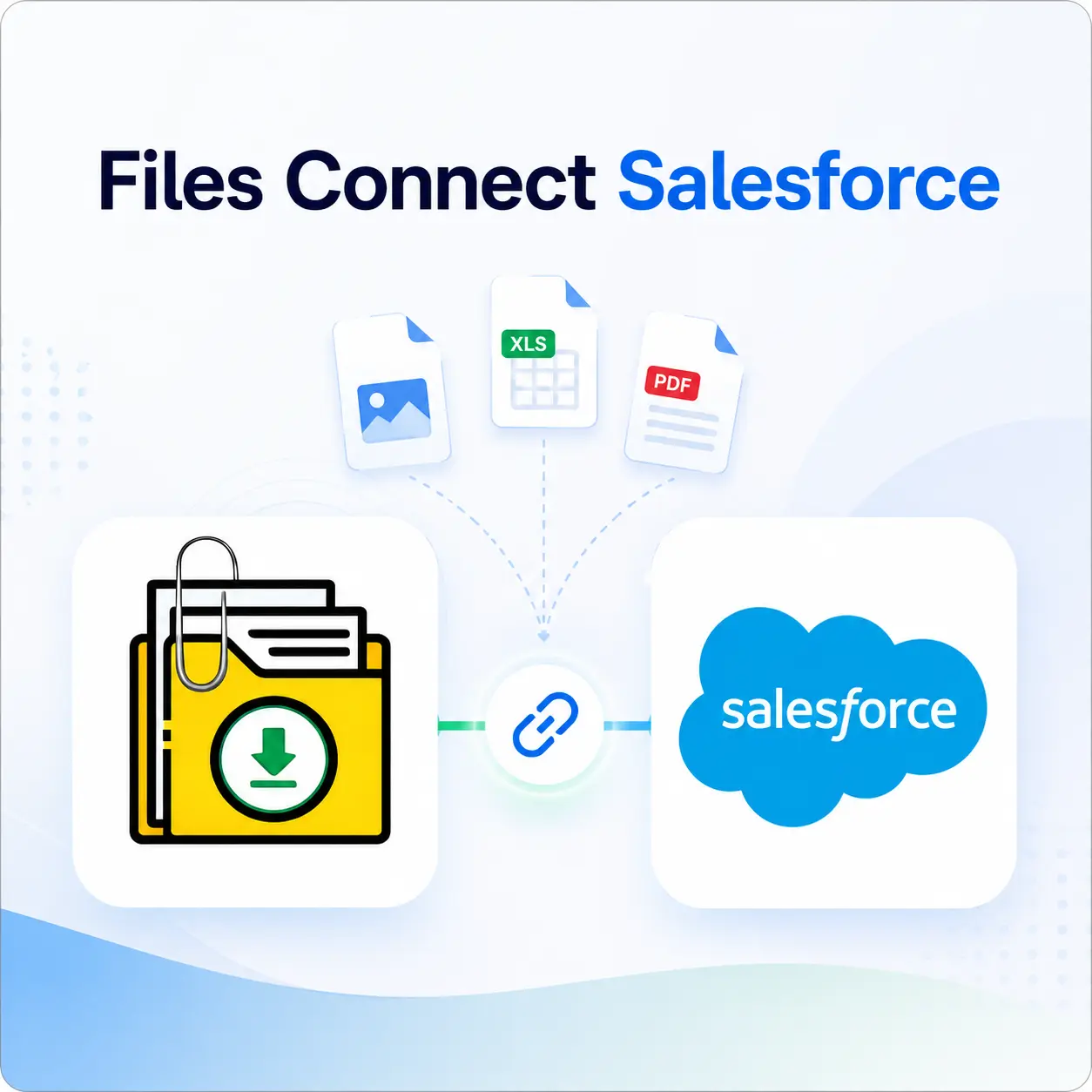
Files Connect for Salesforce is a native feature that allows your org to access files stored in external systems like SharePoint, Google Drive, OneDrive, or Box directly within Salesforce without duplicating those files into Salesforce storage. Users can search, preview, and attach externally hosted files to Salesforce records as if they lived natively in the platform. This is an integration feature, not an export tool, and knowing the difference is important before setting anything up.
Thank you for reading this post, don't forget to subscribe!How Files Connect Salesforce Works
Some of the core components used in Files Connect for Salesforce are:
External Data Sources — configured in Setup, these establish the connection between Salesforce and the external repository (SharePoint Online, Google Drive, etc.), including authentication via OAuth.
Files Connect for cloud repositories—When connected, users can browse and search external files from the Salesforce Files tab or attach them directly to records without needing to download a duplicate copy into Salesforce.
Files Connect for on-prem data—For SharePoint Server or other on-prem repositories, Salesforce needs the Salesforce Connect adapter and a secure agent to act as a bridge.
Permission and sharing sync—Files Connect respects the permissions of the source system where supported, so access control usually follows the external system’s own rules and not Salesforce’s sharing model.
Configuring Files Connect: To do this, you need a Salesforce administrator to create the external data source, authenticate, and assign the right permission sets to users who will access external files.
Where Files Connect Doesn’t Work: Pulling Files from Salesforce
Files Connect solves the reverse problem of bulk file export. It’s designed to bring external files into view within Salesforce, not to bulk extract files already in Salesforce. If you actually need to export attachments, documents, and files that are already in Salesforce (ContentVersion records and legacy attachments) for an audit, migration, or storage cleanup, Files Connect isn’t the feature for you, and native Salesforce export tools have their own limitations here worth knowing.
By default, the Weekly Export Service packages files up into unstructured zip archives and strips out original file names, replacing them with unreadable record IDs—the “zip file scavenger hunt” familiar to any admin who’s ever tried to reconcile exported files back to their parent accounts, cases, or opportunities. And no selective filtering, so if you hit a File Storage Limit Exceeded warning, it’s an all-or-nothing export, not a targeted one.
Bulk Export Files in Salesforce
When you separate the concept of “connecting to external files” from “exporting internal files,” here is the practical workflow for the export side using a file downloader:
- Begin with a list view. Use standard or custom list views already set up in Salesforce to filter down to the exact records you need—Accounts, Opportunities, Cases, or any custom object.
- Run SOQL for accuracy. Instead of downloading your entire file library, you can target specific ContentVersion records by object, date range, owner, or file type.
- Export the entire context. Files maintain original names, folder structure, owner, object type, and parent-record association—no manual matching required after the fact.
- Cleanly proceed downstream. The structured output can be directly loaded into SQL Server, Excel, or another storage system for migrations, audits, or backups.
Files Connect vs. Bulk File Export
| Salesforce Files Connect | files downloader | |
|---|---|---|
| Purpose | Access external files from within Salesforce | Export internal Salesforce files in bulk |
| Direction | Brings external files into view | Pulls internal files out |
| Storage | Files stay in the external system | Files are saved to your local system or storage |
| Setup | External Data Source + OAuth Configuration | One-click, list view or SOQL-based |
| Best For | SharePoint, Google Drive, Box integration | Audits, migrations, storage cleanup |
The export is native to Salesforce and honors existing permission sets and sharing rules, so bulk-exporting internal files doesn’t add a separate compliance risk to your audit or migration process.
[Book a Free Demo] | [View Pricing] | [Install on AppExchange]